There Are Only Artists
On agents, artists, and what matters.

I watched the season finale of Pluribus the other night and caught a glimpse of The Story of Art by E.H. Gombrich. Seeing it bubbled up my days in art school and its famous opening line:
“There really is no such thing as Art. There are only artists.”
Much like our pal E.H.[1], I've never cared much about what counts as “real art” --I didn't in school, and I don't now. Neither do I care about how the work is done. All I care about is how it makes me feel and who's doing the work.
So what about agents? My friend Michael Lohaus and I have been debating this. He thinks directing an agent is like directing an illustrator--and that one day, you won't be able to tell the difference. I think agents might already match at execution, though with less consistency. But execution isn't the interesting question anymore.
The Work
I've generated avatars using Midjourney, ChatGPT, and tools built by colleagues at Vercel. I set constraints--photos, references, game key art--and iterated until I got what I wanted.
When the agent rendered me in the style of Enter the Gungeon, it gave me guns I didn't ask for--weapons that don't exist in the game but could. If I was making a sequel, that surprise could lead somewhere unexpected. But notice what happened: the agent surprised me with more of the same. More guns, more Gungeon. It extrapolated within the style's logic. It didn't question the brief.
When Loop Hero launched, Jon Romero Ruiz was commissioned to illustrate portraits of influencers in the game's pixel art style. As a thank you, he rendered me and a few colleagues too--unprompted, no direction. A gift.
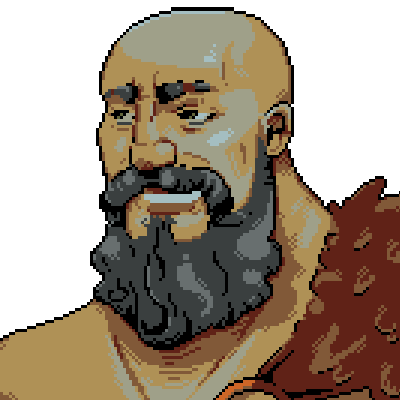
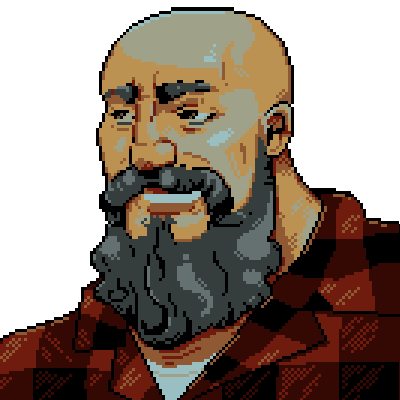
He nailed the style--and some of his own bled through. He saw me as a barbarian in one portrait, bundled against Albertan cold in another. Those weren't in any reference I gave him. They came from somewhere--a read on who I am, filtered through his sensibility, made concrete in pixels. The portrait contains a perspective.
The Harder Question
When I direct an agent, am I the artist?
I want to say yes. I set the constraints. I iterate. I know when to stop. That feels like creative work--and it is. But there's something uncomfortable in it too. When I'm prompting, I'm selecting from possibilities the model generates. I'm curating, not creating. The vision is mine, but every brushstroke is borrowed.
Maybe that's fine. Directors don't operate cameras. Architects don't lay bricks. Creative work has always involved orchestrating other hands. But those hands belonged to people who could refuse, reinterpret, bring something unexpected from their own well. The agent has no well. It has weights.
So when I look at my AI avatars, I see my taste reflected back at me--refined, iterated, optimized. When I look at Jon's portrait, I see his take on me. One confirms what I already know. The other shows me something I couldn't see alone.
The Feels
My agent avatars show me what I wanted to see. Jon's shows me what he saw. Both are good. But Jon's contains something I couldn't have made, because it required someone else's inner life--a perspective I don't have access to, shaped by a life I haven't lived.
That's what Gombrich meant. There is no Art floating above the work, no abstract standard we're all reaching toward. There are only people, with particular lives, making particular things. The tools don't matter. The person does.
Agents don't converse. They comply. For now, that's the difference that matters.
By the way, Jon Romero Ruiz is available for commissions.
[1]Gombrich was arguing against “Art” as an abstract category--no disembodied standard of beauty floating above the work. There are only individual people, with particular skills, making things in specific contexts.